Deep Pigment & Tone Correction
Q-Switched Laser
Nano-second light pulses shatter stubborn pigment — even deep dermal pigment IPL can't reach.
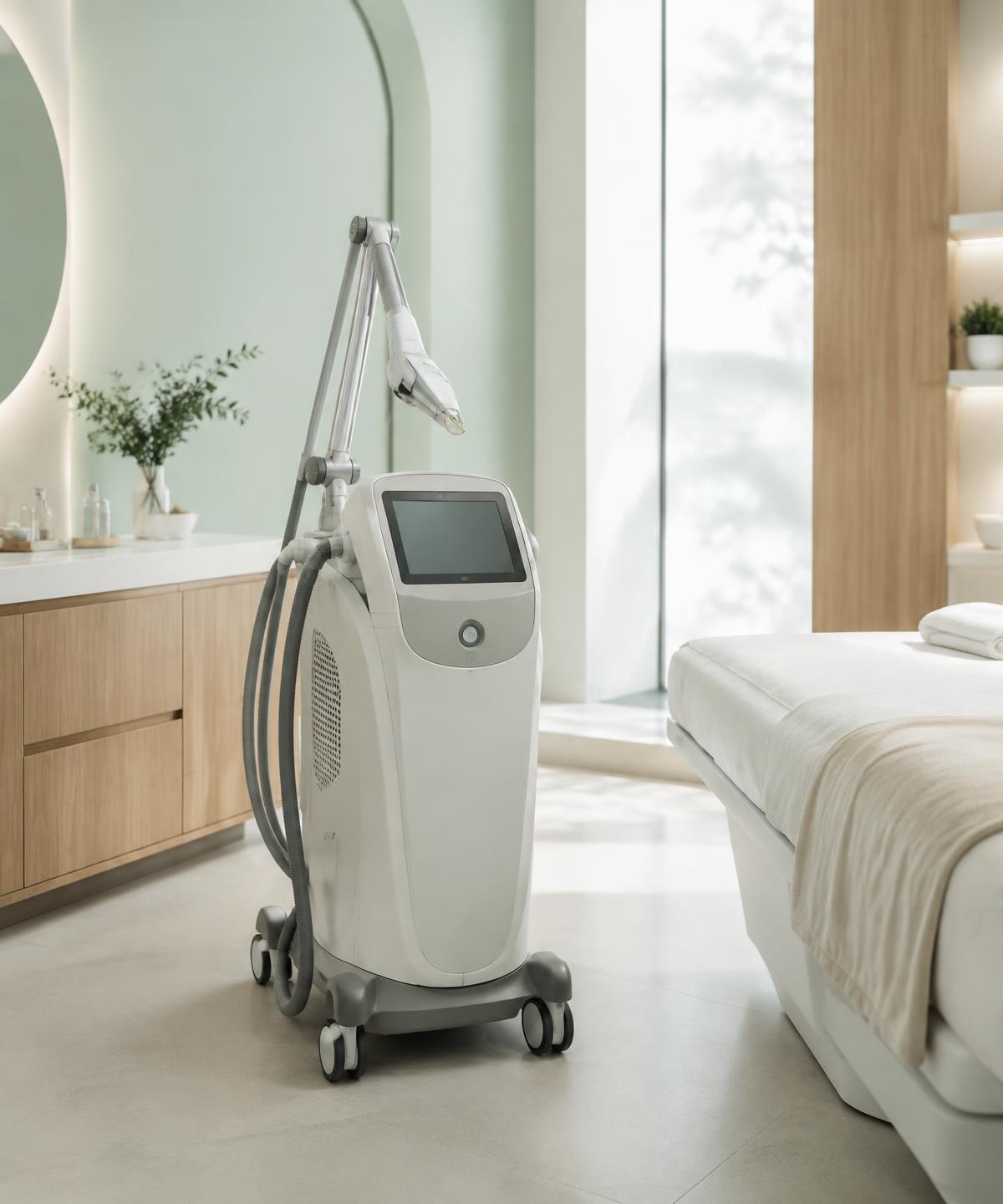
- Best for
- Deep pigment, stubborn sunspots, dull tone
- Downtime
- Minimal — pigment darkens then flakes
- Sessions
- 3–6, spaced 3–4 weeks apart
- Skin types
- Settings-tuned per tone at consult
About the treatment
Q-Switched lasers deliver energy in ultra-short nanosecond pulses that shatter pigment particles into fragments small enough for the body to clear naturally. Where IPL targets surface pigment, the Q-Switched wavelength reaches deeper, stubborn deposits — including melasma-prone pigment when appropriately settings-matched.
It also rejuvenates overall tone and clarity, and gently stimulates collagen — making it a staple for dull, uneven or chronically pigmented skin.
What it treats
- Stubborn sunspots
- Deep dermal pigment
- Freckles
- Post-inflammatory marks
- Dull, uneven tone
- Hori's naevus (assessed)
How it works
The process, step by step.
- 01
Match
The wavelength and fluence are matched to your pigment depth and skin tone.
- 02
Shatter
Photoacoustic pulses fragment pigment without heating the surrounding skin.
- 03
Clear
Fragmented pigment rises to the surface and is shed naturally over days to weeks.
Is this right for me?
Q-Switched Laser suits you if you're…
Suitability is always confirmed at your consultation and skin analysis before any treatment is booked.
- Pigment that has resisted lighter-based treatment
- Uneven tone and dullness wanting cumulative clarity
- Pigment concerns confirmed safe for laser at analysis
Questions
Everything you might ask.
Why does my pigmentation look darker after treatment?
Treated pigment darkens as it is brought to the surface, then flakes away over 7–10 days. This is expected.
Is it safe for melasma?
Melasma is managed, not cured. Low-fluence settings with strict sun care form part of a staged plan we design with you.